Labor induction: reasons, methods, and how to make the choice your own
Being offered an induction can feel like your birth plan just changed. It is a choice you make with your team, and knowing the steps makes it far less daunting.
Updated October 16, 2026 · sources checked October 13, 2026 · Editorial: The Mamavela team

In short
Labor induction means starting labor with medical help instead of waiting for it to begin on its own. It is offered when continuing the pregnancy carries more risk than birth, for example from 41 weeks, after your waters break without contractions, or with conditions such as high blood pressure or diabetes. It is your choice, and it usually starts with softening the cervix.
Why induction is offered
| Reason | What official guidance says | Source |
|---|---|---|
| Going past your due date | Induction offered if labor has not started by 41 weeks (NHS); ACOG lists a pregnancy lasting more than 41 to 42 weeks | NHS, ACOG |
| Waters breaking before labor | Risk of infection rises if more than 24 hours pass before labor; from 34 weeks you choose induction or waiting with monitoring | NHS |
| Your health | High blood pressure, pre-eclampsia, diabetes, intrahepatic cholestasis, heart, lung or kidney problems | NHS, ACOG |
| Your baby's health | Poor growth, low amniotic fluid, placenta problems | ACOG |
| Elective, at your request | Possible for healthy pregnancies, never before 39 weeks | ACOG |
NICE explains that most labors start naturally before 42 weeks: in recent NHS data, about half of spontaneous labors had started by the end of 39 weeks and 99% by the end of 41 weeks. Some risks, including stillbirth, increase gradually after 41 weeks, which is why induction is discussed from then. In a Cochrane review of 34 trials with over 21,000 women, Middleton and colleagues found that a policy of induction, usually after 41 weeks, led to fewer perinatal deaths and stillbirths than waiting, and probably fewer cesareans. The absolute risk is small either way: the review estimated 544 inductions to prevent one perinatal death.
Elective induction at 39 weeks: what the evidence says
In the US, ACOG says induction may be considered for healthy women at 39 weeks to reduce the chance of cesarean birth. This rests largely on the ARRIVE trial by Grobman and colleagues: among 6,106 first-time mothers with low-risk pregnancies, induction at 39 weeks gave a lower cesarean rate (18.6% vs 22.2%) and no significant difference in serious problems for babies. It is an option, not a rule. In the UK, NICE frames the choice around 41 weeks and your own circumstances.
How labor is induced, step by step
- Membrane sweep. At an antenatal visit after 39 weeks (NICE, NHS), your midwife or doctor sweeps a finger around your cervix to separate the membranes, which releases prostaglandins that may start labor. It can be uncomfortable and cause cramping or some bleeding. You can have more than one.
- Ripening the cervix. If your cervix is not yet soft, hormones (prostaglandins) are placed in your vagina as a pessary or gel, or taken as tablets; or a device widens it: a small water-filled balloon catheter or an osmotic dilator (NHS). ACOG notes that some prostaglandins are not used after a previous cesarean or other uterine surgery. Your team may use the Bishop score to rate how ready your cervix is.
- Breaking your waters (amniotomy). Once the cervix has opened a little and the baby's head is low, a small hole is made in the membranes. Most people go into labor within a few hours (ACOG).
- Oxytocin drip. If contractions do not start or stay weak, oxytocin is given through a drip in your arm. ACOG says contractions usually start about 30 minutes after it begins, and your contractions and baby's heart rate are monitored.
NICE says outpatient induction, going home after the first step, can be considered with vaginal prostaglandins or mechanical methods if you have no medical conditions or complications, with a clear plan for when to come back.
What it feels like
The NHS is honest about it: induced labor is usually more painful than labor that starts on its own, you may stay in hospital longer and have more examinations, and you are more likely to have an assisted birth with forceps or ventouse. Every pain relief option normally available, including an epidural, stays open to you. Once labor is established, it follows the usual stages of labor.
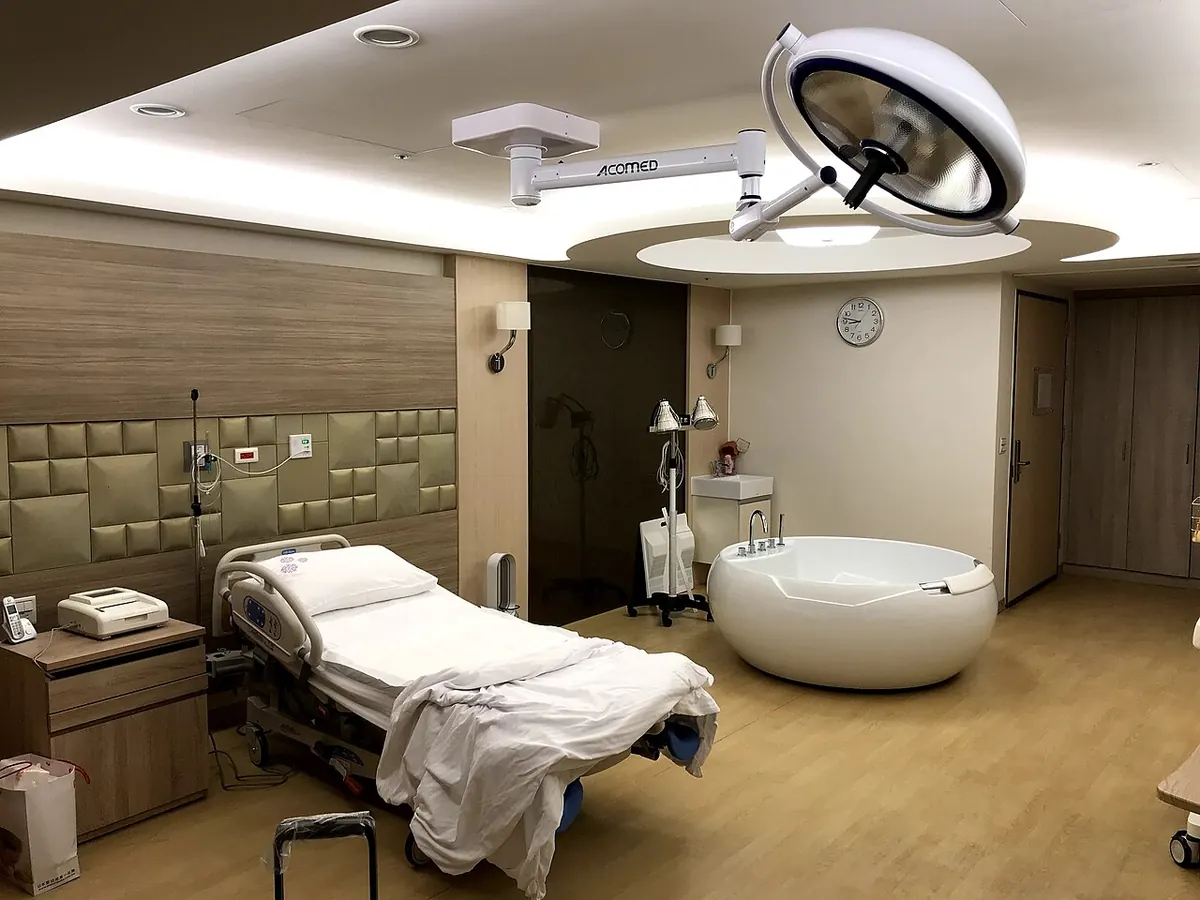
Risks to discuss
ACOG lists:
- contractions that come too often with oxytocin, which can affect the baby's heart rate (the drip can be reduced or stopped);
- infection of the membranes or of the baby;
- rupture of the uterus, which is rare.
If induction does not work and you and your baby are well, ACOG says you may be able to go home and try again another day. The NHS says you may be offered another method, a cesarean, or a wait before reassessment. More on that path in our c-section guide.
Questions to ask before you agree
Add your answers to your birth plan. If labor starts on its own before your date, the signs of labor and the hospital bag checklist still apply.
Is this normal? When to call
Is it normal?
Waiting many hours, even a day or more, between the first step and active labor is common with induction. Ask your midwife for updates; slow does not mean something is wrong.
For your partner
For the partner
Induction is a waiting game: pack snacks, chargers, a playlist and patience. Ask the questions above with her, keep track of what has been done and when, and make sure her choices are heard at each step.
Questions parents ask
Do I have to be induced?
No. The NHS says it is your choice. If you go past 42 weeks and decide not to be induced, you should be offered increased monitoring of your baby. Your midwife or doctor should explain the benefits and risks for your situation.
How long does an induction take?
The NHS says it usually takes many hours for the first treatments to start working, and you may need more than one step. Bring things to pass the time and plan for a longer stay than with labor that starts on its own.
Is induced labor more painful?
The NHS says induced labor is usually more painful than labor that starts on its own, and that all the usual pain relief options, including an epidural, remain available to you.
Does induction lead to a cesarean?
Not according to the evidence for healthy pregnancies. In the ARRIVE trial, first-time mothers induced at 39 weeks had fewer cesareans than those who waited (18.6% vs 22.2%), and a Cochrane review found probably fewer cesareans with induction from 41 weeks.
Do natural methods like spicy food or sex start labor?
The NHS says there are no proven ways to start labor yourself at home, and no evidence that hot baths, food, drinks, sex or herbal supplements work. Herbal supplements could be harmful. Avoid sex once your waters have broken.
Sources
- NHS — Inducing labour checked October 13, 2026
- ACOG — Labor Induction (FAQ) checked October 13, 2026
- NICE NG207 — Inducing labour, recommendations checked October 13, 2026
- Grobman WA et al. (2018), New England Journal of Medicine — Labor Induction versus Expectant Management in Low-Risk Nulliparous Women (ARRIVE, PMID 30089070) checked October 13, 2026
- Middleton P et al. (2020), Cochrane Database of Systematic Reviews — Induction of labour at or beyond 37 weeks' gestation (PMID 32666584) checked October 13, 2026
Mamavela explains; it does not replace your midwife, doctor or pediatrician, who know your situation. If something worries you, call them. In an emergency, call 911 (US), 999 (UK) or 112.