Where to give birth: how to choose the right place for you
Choosing where your baby will be born is one of the first real decisions of pregnancy. It is yours to make, it can change along the way, and the right answer depends on your health, your history and what matters most to you.
Updated October 14, 2026 · sources checked October 14, 2026 · Editorial: The Mamavela team
In short
Most babies are born in a hospital maternity unit, which suits every pregnancy and is the place to plan for if your pregnancy is high risk. With a healthy, low-risk pregnancy you can also consider a midwife-led unit or birth center, or a home birth. NICE says planned midwife-led births mean fewer interventions with the same outcomes for babies. You can change your mind at any point.
The places you can give birth, side by side
The words change between the US and the UK, but the choice always comes down to four kinds of place.
| Place | US name | UK name | Epidural on site | Doctors and newborn specialists on site | Who it suits |
|---|---|---|---|---|---|
| Hospital labor ward | Hospital labor and delivery unit | Obstetric unit (labour ward) | Yes | Yes, level depends on the hospital | Every pregnancy, and the planned place for high-risk pregnancies |
| Midwife-led space inside a hospital | Hospital-based birth center or alongside unit (not everywhere) | Alongside midwifery unit (AMU) | Not in the room, but a short transfer away | Down the corridor | Low-risk pregnancies who want a calmer, home-like room |
| Separate midwife-led center | Freestanding birth center | Freestanding midwifery unit (FMU) | No | No, transfer by car or ambulance | Low-risk pregnancies, ideally close to a hospital |
| Your home | Planned home birth | Home birth | No | No, transfer if needed | Low-risk pregnancies, after an honest talk about transfer |
In the United States almost every birth still happens in a hospital. March of Dimes, using national birth certificate data, counts 2.3% of births outside hospital in 2024: 1.6% at home and 0.6% in a birth center. In England, NICE asks local services to make all four settings available to women, in their area or a neighbouring one.
What each setting can do for you
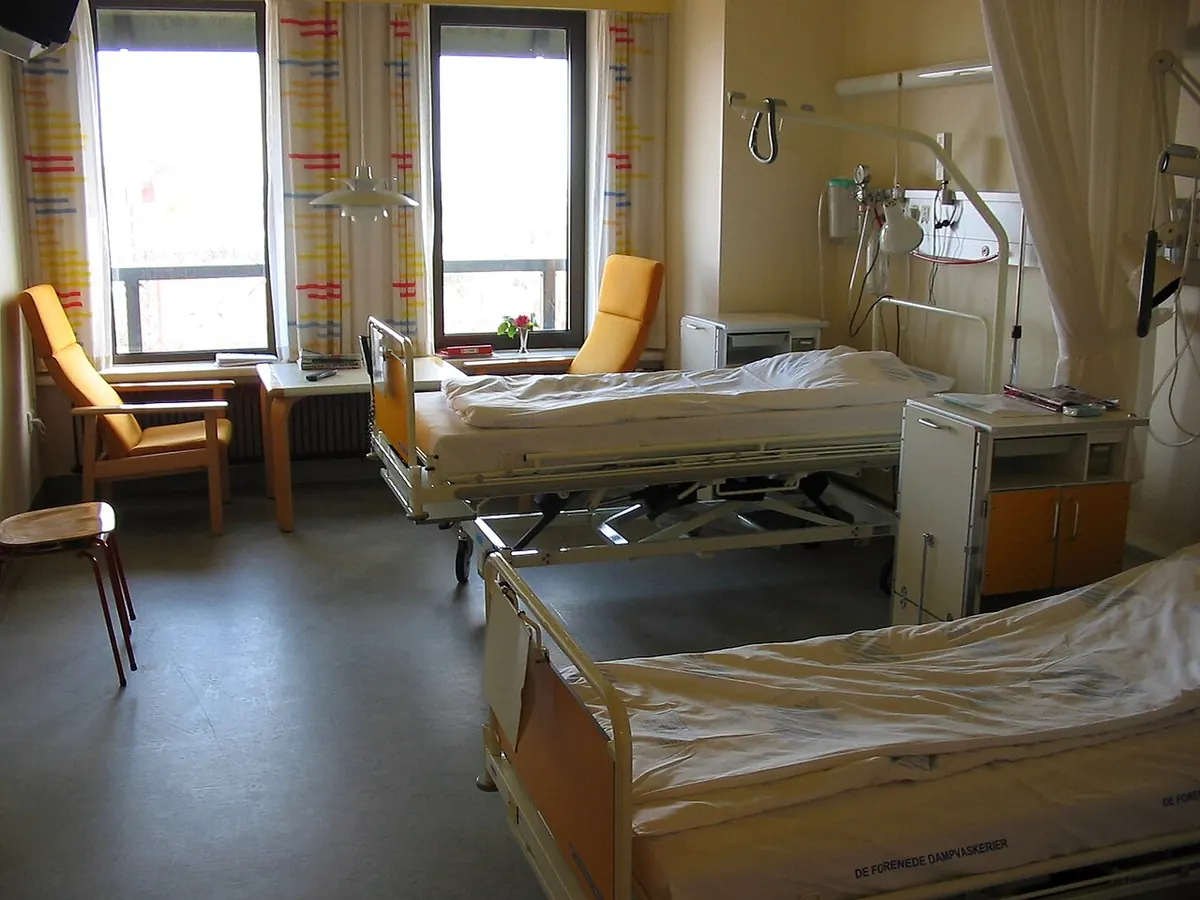
- Hospital (obstetric unit, labor and delivery): obstetricians, anesthesiologists who give epidurals and newborn specialists are on site. The NHS lists the flip side: you are more likely to have an epidural, an episiotomy or a forceps or ventouse birth, and you may meet a midwife you do not know. The level of care for you and your baby varies from one hospital to another: see levels of maternity and newborn care.
- Midwife-led unit or birth center: homely rooms, often a birth pool, midwives who protect normal labor. Ask which pain relief is on offer: an epidural always means moving to the labor ward. Our birth center vs hospital page explains eligibility, transfers and costs.
- Home: your own space, no journey in labor, your other children nearby. A midwife comes to you and arranges a transfer if needed. Read home birth: the facts, pros and cons before you decide.
What the evidence says for a low-risk pregnancy
The largest study of place of birth, Birthplace in England (BMJ 2011, 64,538 women with low-risk pregnancies), is the basis of today's NICE advice. NICE NG235 summarises it per 1,000 births:
| Planned place | First baby: serious problems for the baby | First baby: transfer to a labor ward | Not first baby: serious problems for the baby | Not first baby: transfer |
|---|---|---|---|---|
| Home | 9 | 450 | 3 | 115 |
| Freestanding midwifery unit | 5 | 363 | 3 | 94 |
| Alongside midwifery unit | 5 | 402 | 2 | 125 |
| Obstetric unit | 5 | 10 (to another hospital) | 3 | 10 (to another hospital) |
Two things stand out. Babies did just as well in midwife-led units as on the labor ward, with fewer forceps, cesareans and episiotomies. And for a first baby, almost half of planned home births ended with a transfer, most often because labor was slow, which is a reason to think about distance and transport, not a failure.
Safety by situation: when the hospital is the plan
NICE lists the situations where planning birth on an obstetric unit is expected to reduce risk. They include, among others:
- Twins or more, a baby lying breech or sideways.
- A previous cesarean or other surgery on the uterus (myomectomy, hysterotomy).
- Preterm labor or waters breaking before 37 weeks: the hospital should also have the right newborn unit, see levels of maternity and newborn care.
- Pre-eclampsia or high blood pressure, diabetes needing medication (including gestational diabetes on treatment), placenta praevia, heart disease, epilepsy.
- A previous stillbirth or a baby harmed during labor, or a serious bleed after a previous birth.
Other factors, such as being 40 or over at booking, a BMI above 35 or a planned induction, call for an individual discussion rather than an automatic answer. ACOG considers a breech baby, twins or a previous cesarean as reasons not to plan a home birth. If one of these applies to you, the choice moves inside the hospital: which hospital, which room, which support.

How to choose, step by step
- Start with your health. Ask your midwife or OB-GYN: "Is my pregnancy low risk today, and which settings are open to me?" The answer can change, so ask again in the third trimester.
- List what matters to you. Epidural available around the clock, a birth pool, a familiar midwife, your partner staying overnight, a neonatal unit on site, the drive time in rush hour.
- See the places. Tours, virtual tours and open evenings exist almost everywhere. Take our questions to ask on a maternity tour.
- Book and write it down. Booking your maternity unit explains how it works in the UK and the US. Then note your choice in your birth plan, with a plan B.
- Keep the door open. NICE asks midwives to discuss your choice without judgement, and to update you if local services change during your pregnancy.
Finding the maternity services near you
- In England: your local options are listed in our guide to maternity services in England by region. You can refer yourself online to the NHS trust you choose.
- In the US: your insurance network decides a lot. Our page on the cost of having a baby in the US explains what you will pay, and Medicaid covers pregnancy for many families: see Medicaid for pregnant women.
For your birth partner
Know the route and how long it takes at night and at rush hour, where to park, which entrance is open after hours and which number to call first. If the plan is a birth center or a home birth, know which hospital you would transfer to. Then check the hospital bag is by the door and learn the signs of labor.
Your guide to choosing
Our guide gathers the comparison grid, the tour questions, the safety points by situation and the costs in one printable document, so you can compare two or three places in one evening.
Questions parents ask
Can I choose which hospital to give birth in?
In England, yes. The NHS says that if you are willing to travel you are free to choose any maternity service, and you can refer yourself to the NHS trust of your choice and change that choice during pregnancy. In the US, the hospital usually follows from your OB-GYN or midwife and from your insurance network, so choose them together.
Is it safe to give birth outside a hospital?
For healthy women with a low-risk pregnancy, NICE says planning birth in a midwife-led unit gives the same outcomes for the baby as an obstetric unit, with fewer interventions. A planned home birth carries a small extra risk for the baby with a first baby (about 4 more serious problems per 1,000 births), and no difference for women who have given birth before.
When should I decide where to give birth?
There is no deadline. In the UK the question comes up at your booking appointment, ideally by 10 weeks. In the US it is part of choosing your prenatal care provider. Wherever you start, the NHS reminds you that you can change your mind at any stage.
What if I am expecting twins or have had a cesarean?
Twins, a breech baby and a previous cesarean are situations where NICE suggests planning birth in an obstetric unit, and ACOG considers them reasons not to plan a home birth. Your team will explain the options that remain open to you, such as a midwife-style room inside the hospital.
Sources
- NHS — Where to give birth: the options (reviewed 29 April 2024) checked October 14, 2026
- NICE NG235 — Intrapartum care, section 1.3 Planning place of birth (tables 1 to 9) checked October 14, 2026
- ACOG and SMFM — Levels of Maternal Care, Obstetric Care Consensus No. 9 (2019, reaffirmed 2025) checked October 14, 2026
- March of Dimes PeriStats — Birth settings in the United States (NCHS natality data 2016-2024) checked October 14, 2026
- ACOG — Planned Home Birth, Committee Opinion No. 697 (2017, reaffirmed 2026) checked October 14, 2026
- Birthplace in England Collaborative Group. Perinatal and maternal outcomes by planned place of birth for healthy women with low risk pregnancies. BMJ 2011 (PMID 22117057, DOI 10.1136/bmj.d7400) checked October 14, 2026
Mamavela explains; it does not replace your midwife, doctor or pediatrician, who know your situation. If something worries you, call them. In an emergency, call 911 (US), 999 (UK) or 112.