Breast pump types: how to choose the one you will actually use
The right pump depends less on the brand than on why, where and how often you will express.
Updated October 18, 2026 · sources checked October 13, 2026 · Editorial: The Mamavela team

In short
Choose a breast pump by how often you will use it. A manual pump suits occasional bottles; a double electric pump suits regular pumping, such as going back to work; a hands-free wearable pump trades some convenience for portability; a rented multi-user pump suits a premature baby or building supply. The FDA advises never buying or sharing a used single-user pump.
First, a plain note
Mamavela does not sell breast pumps. This guide explains the types, what the FDA and NHS say, and what to check, so you can choose calmly wherever you buy, rent or borrow through your health plan.
Do you need a pump at all?
The NHS lists the usual reasons to express: being away from your baby (work, special care), uncomfortably full breasts, a baby who cannot latch well yet, or wanting to boost supply. You can express by hand or with a pump. Hand expression takes practice, but it needs nothing but clean hands and a clean container, and works during a power cut.
A Cochrane review of 41 trials concluded that the right method depends on the time since birth, the reason for expressing and the mother; low-cost options such as starting early, relaxation, breast massage, warmth, hand expression and lower-cost pumps may be as effective as large electric pumps for some outcomes (Becker et al., Cochrane 2016).
The main types compared
The FDA groups pumps by power source (manual, battery-powered, electric) and by whether they express one breast or both at once.
| Type | How it works | Suits | Watch out for |
|---|---|---|---|
| Hand expression | Your hand, a "C" shape around the areola | Colostrum, engorgement, occasional milk | Takes practice; ask your midwife to show you |
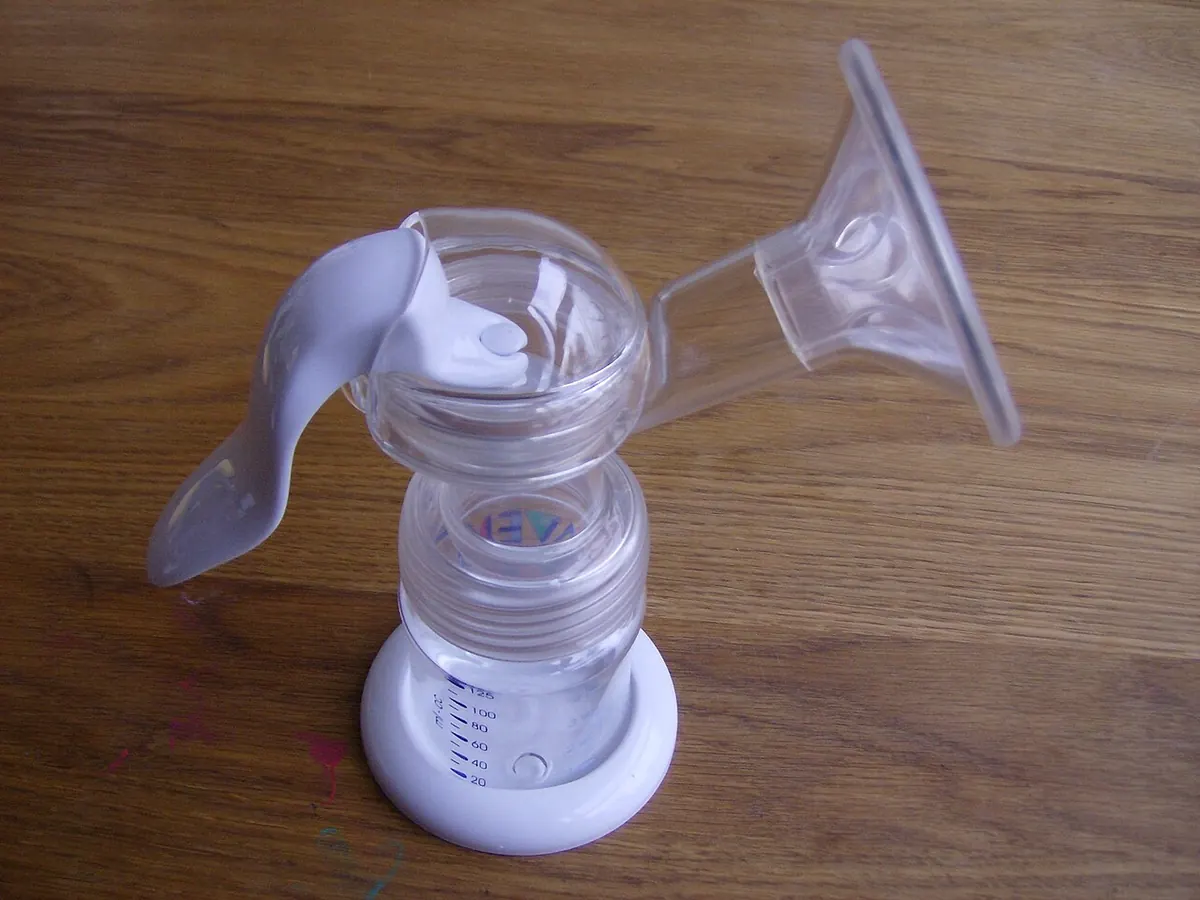
| Manual pump | You squeeze a handle or lever to create suction | Occasional bottles, a backup | Usually single; tiring for daily use |
| Battery or rechargeable single | Small motor, one breast at a time | Part-time use, travel | Slower than double pumping |
| Double electric | Motor pumps both breasts at once, adjustable suction | Daily pumping, return to work, exclusive pumping | Needs a socket or charge; more parts to wash |
| Wearable (in-bra) | Motor and collection cup sit inside your bra | Pumping while moving, commuting | Check cup capacity and fit before buying |
| Multi-user rental | Hospital or authorized provider rents the motor; you own the kit | Premature or ill baby, building or protecting supply | Only the motor is shared, never the kit |
Why double pumping matters for regular use. In a small Australian study of 31 mothers, pumping both breasts at once triggered more milk ejections and removed more milk, with a higher fat content, than pumping one side after the other (Prime et al., Breastfeeding Medicine 2012). Pumping both sides at once also saves time.
"Hospital grade", used pumps and rentals: what the FDA says
- "Hospital grade" is not a term the FDA recognizes; it does not tell you a pump is safe.
- Used pumps: do not buy or borrow a second-hand single-user pump: the FDA says it can expose you and your baby to contamination.
- Rentals: multiple-user pumps can be rented from an authorized provider, but only with your own accessory kit (breast shields, tubing, containers).
- Backup: the FDA suggests keeping a manual pump in case of power cuts or flat batteries.
- Problems: if a pump hurts you, see your healthcare provider; in the US, problems can be reported to the FDA (MedWatch, 1-800-FDA-1088).
Fit and comfort: the part that matters most
The NHS gives two rules that apply to every pump:
- Build suction up slowly. Starting on high straight away may be painful or damage your nipple.
- Get the right funnel (flange) size. Many pumps offer different sizes; the pump should never cause bruising or catch your nipple as it is drawn into the funnel.
If pumping hurts, stop and ask a midwife, health visitor or lactation consultant to check the fit. Pain is not the price of pumping.
Cleaning, in brief
The CDC's routine: take the kit apart after every use, rinse under running water, wash with soap and warm water (or on the top rack of a dishwasher), and air-dry on a clean towel without rubbing. Sanitize at least once a day if your baby is under 2 months, was born prematurely or has a weakened immune system. The FDA adds: replace tubing straight away if it looks cloudy or mouldy.
What you really need vs nice-to-have
| Really need | Nice-to-have |
|---|---|
| A way to express that suits how often you will do it | A second set of parts for work |
| Correct funnel size and adjustable suction | A hands-free pumping bra |
| Clean containers or milk storage bags | A cool bag with ice packs for the commute |
| A cleaning routine and a place to air-dry parts | A wearable pump for pumping on the move |
| A backup manual pump or hand expression | A car adapter or spare battery |
Printable checklist: before you choose
Good to know
A hands-free pumping bra or a well-fitting nursing bra makes double pumping much easier. If you are still getting the hang of feeding at the breast, the breastfeeding positions guide comes first: most babies take milk from the breast more efficiently than any pump.
When to call
Choosing a pump for work? Back to Work After Baby lists the kit, the schedule and your rights at work in the US and UK.
Questions parents ask
Do I need a breast pump if I am breastfeeding?
Not necessarily. The NHS explains that you can express by hand, which needs no equipment or electricity. A pump becomes useful if you will be away from your baby regularly, your baby is in special care, or you want to build up a supply of expressed milk.
Is a hospital-grade pump better?
The FDA does not recognize "hospital grade" as a defined term, so the label does not tell you a pump is safe. Multi-user pumps rented from an authorized provider are a separate category, used with your own personal kit.
Can I buy a second-hand breast pump?
The FDA advises against buying or sharing a used single-user pump because of the risk of contamination, and buying used may void the warranty. Only multiple-user rental pumps are designed to be shared, and each user needs her own kit.
Are wearable pumps as good as standard electric pumps?
There is no independent trial comparing them that we could verify. The Cochrane review of expression methods found that no pump consistently increased the volume obtained, and that cheaper methods can be as effective for some outcomes. Choose by how and where you will pump.
Sources
- FDA — Types of breast pumps checked October 13, 2026
- FDA — What to know when buying or using a breast pump checked October 13, 2026
- NHS — Expressing and storing breast milk checked October 13, 2026
- CDC — How to clean and sanitize breast pumps checked October 13, 2026
- Becker GE et al. (2016), Cochrane Database of Systematic Reviews — Methods of milk expression for lactating women (PMID 27684560) checked October 13, 2026
- Prime DK et al. (2012), Breastfeeding Medicine — Simultaneous breast expression in breastfeeding women is more efficacious than sequential breast expression (PMID 23039397) checked October 13, 2026
Mamavela explains; it does not replace your midwife, doctor or pediatrician, who know your situation. If something worries you, call them. In an emergency, call 911 (US), 999 (UK) or 112.