Mastitis: symptoms, care at home and when to call
A hot, painful patch on your breast and a sudden flu-like feeling is scary. Most of the time it settles quickly with the right care.
Updated October 19, 2026 · sources checked October 13, 2026 · Editorial: The Mamavela team
In short
Mastitis is inflammation of the breast, usually on one side: a swollen, hot, painful area, sometimes a hard wedge-shaped lump, often with flu-like aches and a high temperature. The NHS advises continuing to breastfeed as your baby wants, cold compresses, gentle handling and rest. See a GP or doctor if you are not better within 12 to 24 hours; antibiotics may be needed.
Signs of mastitis
The NHS lists symptoms that usually affect one breast and often come on quickly:
- a swollen area that may feel hot and painful to touch; redness can be harder to see on black or brown skin;
- a wedge-shaped lump or a hard area;
- a burning pain, constant or only while feeding;
- nipple discharge, white or with streaks of blood;
- flu-like symptoms: aches, a high temperature, feeling hot, cold or shivery, and tiredness.
MedlinePlus adds tender or swollen lymph nodes in the armpit on the same side.
What is happening: a spectrum, not a single problem
Breastfeeding doctors now describe mastitis as a spectrum. The 2022 Academy of Breastfeeding Medicine protocol runs from ductal narrowing (what used to be called a "blocked duct") to inflammatory mastitis, bacterial mastitis, and more rarely an abscess (Mitchell et al., Breastfeeding Medicine 2022). The common thread is inflammation and swelling. That is why the newer advice is about calming the tissue rather than forcing milk out.
The protocol also reassures: lactating breasts can feel lumpy and even sore at times without anything being wrong, and morning redness after a long stretch of sleep often reflects fullness and swelling rather than infection.
What helps at home
| Do | Why |
|---|---|
| Keep breastfeeding as often as your baby wants | Stopping suddenly can make symptoms worse (NHS) |
| Check positioning and attachment with a midwife, health visitor or lactation consultant | Poor attachment is a common cause, and of repeat episodes (NHS) |
| Hand express only for comfort if feeding hurts or baby refuses that side | Expressing more than your baby needs drives more milk (NHS, ABM) |
| Cold compress, such as a cloth soaked in cold water, 10 minutes every hour | Eases pain and swelling (NHS); ice is favoured by the ABM protocol |
| A comfortable, supportive bra; nothing tight | Pressure on the breast adds to swelling (NHS) |
| Rest, fluids, help with everything else | Recovery needs it |
| Ask your pharmacist which pain relief is compatible with breastfeeding | The NHS lists over-the-counter options that are; your pharmacist confirms which and how much for you |
| Avoid | Why |
|---|---|
| Firm pressure or deep massage | The NHS says any pressure should be gentle; the ABM says deep massage increases inflammation and tissue injury |
| Pumping "to empty" the breast | It keeps supply high and can make swelling worse (ABM) |
| Oils, soaks or creams on the breast | Not advised by the NHS; the ABM says saline soaks and castor oil do not treat it |
| Stopping breastfeeding abruptly | Can worsen symptoms and may lead to an abscess (NHS) |
Good to know
You may read older advice, still found on some official pages, to use warm compresses and massage towards the nipple. The NHS now suggests only brief, gentle warmth just before expressing, and cold for pain. If you are unsure, ask your midwife or lactation consultant which approach suits you.
Treatment from a doctor
The NHS says a GP will usually prescribe antibiotics if mastitis is not getting better. Most antibiotics are compatible with breastfeeding, but not all, so check with your doctor. MedlinePlus notes that if you take antibiotics you should keep breastfeeding or pumping to relieve swelling. An abscess, a pus-filled lump, may need drainage; you can usually carry on breastfeeding during treatment (NHS).
When to call
Lowering the chance it comes back
- Get a feed watched if you keep getting mastitis: the NHS links repeat episodes to positioning and attachment. Our breastfeeding positions guide shows holds that change the angle of pressure on the breast.
- Avoid long gaps between feeds when you can, and wean gradually rather than suddenly (MedlinePlus).
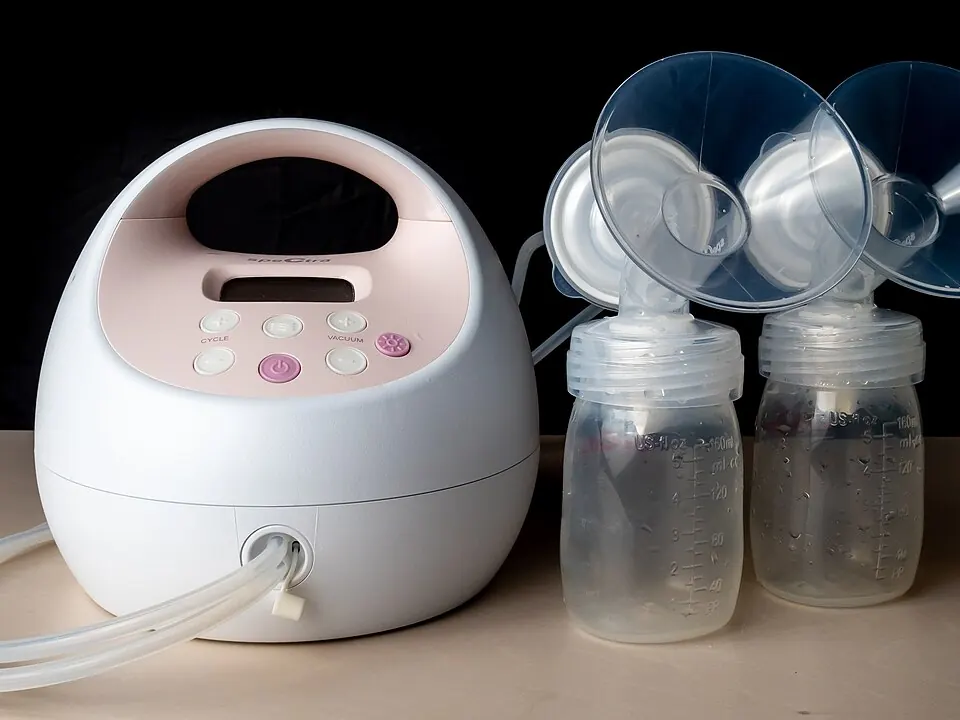
- If you pump, use the right flange size and moderate suction; see the breast pump guide. The ABM protocol advises expressing a volume close to what your baby takes.
- Wear a supportive, non-tight bra; our nursing bra guide explains fit.
- Keep an eye on feeds and nappies with the baby feeding chart if you worry your baby is getting less from the sore side.
For the partner
For the partner: take the baby between feeds so she can sleep, bring cold compresses and water, and drive her to the GP if things are not improving within a day.
Where to get help
- UK: your midwife, health visitor or GP; NHS 111; the National Breastfeeding Helpline, 24 hours a day, on 0300 100 0212.
- US: your OB-GYN or midwife, your pediatrician's office, or a lactation consultant at your birth hospital.
Feeling run down and low while you recover is common. If low mood lasts beyond two weeks, read about postpartum depression and where to get help.
Questions parents ask
Can I keep breastfeeding with mastitis?
Yes. The NHS advises continuing to breastfeed whenever your baby wants, and says stopping suddenly can make symptoms worse. If antibiotics are needed, a very small amount may pass into milk; the NHS says there is no risk to your baby, though they may be a little unsettled.
Should I use heat or ice for mastitis?
The NHS suggests a cold compress for pain, for 10 minutes every hour, and only brief, gentle warmth before hand expressing. The 2022 Academy of Breastfeeding Medicine protocol also favours ice, noting that heat may worsen swelling even if it feels comforting.
Should I massage a lump hard or pump to empty the breast?
No. Current guidance advises gentle handling only. The NHS says not to apply firm pressure and not to express more milk than your baby needs; the Academy of Breastfeeding Medicine warns that deep massage and pumping to empty can increase inflammation.
Can I get mastitis if I am not breastfeeding?
Yes. The NHS notes it can affect people who are not breastfeeding, including men, for example after nipple damage or with smoking. If you have breast inflammation and are not breastfeeding, see your GP or doctor.
Sources
- NHS — Mastitis checked October 13, 2026
- NHS — Breast pain and breastfeeding (engorgement, blocked ducts, mastitis) checked October 13, 2026
- MedlinePlus (NIH) — Breast infection checked October 13, 2026
- Office on Women's Health (HHS) — Common breastfeeding challenges checked October 13, 2026
- NHS — Sepsis (when to call 999) checked October 13, 2026
- Mitchell KB et al. (2022), Breastfeeding Medicine — Academy of Breastfeeding Medicine Clinical Protocol #36, The Mastitis Spectrum, Revised 2022 (PMID 35576513) checked October 13, 2026
Mamavela explains; it does not replace your midwife, doctor or pediatrician, who know your situation. If something worries you, call them. In an emergency, call 911 (US), 999 (UK) or 112.